Best Water Delivery in Tashkent 2026: Buyer's Guide
Tashkent's hot summers, long heating seasons, and uneven tap-water quality across districts have turned bottled-water delivery from a premium amenity into an everyday utility. By 2026, dozens of providers operate across the capital and the Tashkent Region — from large national supermarket-distributed brands to small regional bottlers and reverse-osmosis-only delivery services. The aim of this guide is not to crown a winner but to give a household or office a rational, verifiable checklist to apply to any candidate, without relying on marketing slogans.
We deliberately avoid naming specific competitor brands here. The point is to help you build your own evaluation list and apply it to whoever you are considering. A side-by-side comparison against named brands is the subject of a separate post; in this guide, we use generic archetypes you can map onto your own shortlist.
The article also explains where Aqua Element fits within these criteria. Aqua Element is the artesian brand operated by Blue Stream Group, serving Tashkent and the Tashkent Region only, sourcing from a roughly 120-metre artesian well in Quyi Chirchiq District and treating water through 11 published filtration stages.
Why bottled-water delivery has become the default in Tashkent
Tashkent has a sharply continental climate; July and August daytime temperatures regularly exceed 38–40 °C. At that level, an adult easily drinks 2.5–3 litres per day, and an active office with a cooler and a kitchen can consume 60–80 litres a week per ten staff. Carrying that volume from a supermarket is impractical, and small PET bottles are inefficient on both per-litre cost and plastic footprint.
At the same time, residents have legitimate questions about tap water. The municipal network typically delivers water that meets sanitary requirements at the point of intake, but the condition of in-building piping varies enormously across building stock of different ages. Colour, chlorine smell, sediment after boiling, and limescale on a kettle are common complaints, especially in older buildings. That does not make tap water dangerous, but it does explain why many households prefer a source independent of in-building infrastructure for drinking and cooking.
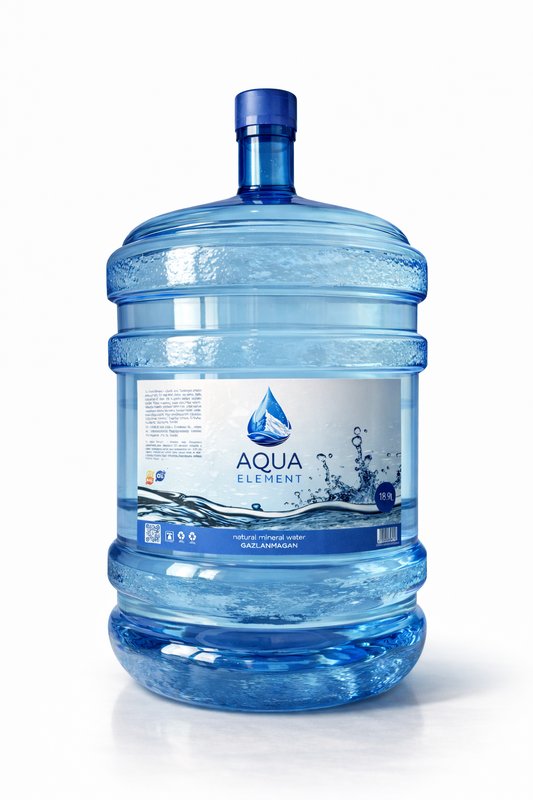
The third factor is lifestyle. Delivery removes a recurring chore: a 18.9-litre bottle goes onto a pump or cooler, the empty is collected by the driver, and the order repeats on subscription. For offices it becomes part of the HR baseline; for parents of young children it is a form of peace of mind in its own category.
What you should actually check before choosing a provider
Marketing copy from almost every delivery service sounds the same: "pure", "healthy", "natural". The differences become visible only when you ask specific questions. The checklist below is what we recommend applying to any candidate.
Source water
The first and most important question: where does the water come from? The candidate categories are an artesian well (deep, protected aquifer), a surface intake (river, reservoir), processed municipal water (essentially polished tap water), or an imported product. A serious provider will name the well's district, depth, and type, and will be willing to show the well's passport. Vague answers like "natural water" with no source disclosure are a yellow flag.
Depth and logic of filtration
"Multi-stage filtration" is a fuzzy phrase. What matters is the actual sequence. The minimum for industrial-grade bottled drinking water is mechanical pre-filtration, carbon polishing, softening / ion exchange, a membrane stage (reverse osmosis or ultrafiltration), UV disinfection, and a final stabilisation step. If reverse osmosis is in the chain, mineralisation matters — demineralised water without mineral re-introduction is not a complete drinking-water product.
Mineral profile
Good practice is to publish indicative TDS, pH, and the main ions: calcium, magnesium, sodium, potassium, bicarbonate, sulphate, chloride. This lets buyers match water to their preferences: some want low-mineralisation water for daily drinking and tea, others prefer a higher mineral load for specific use cases.
Regulator oversight
In Uzbekistan, drinking-water safety is overseen by the Committee of the Republic of Uzbekistan for Sanitary and Epidemiological Wellbeing and Public Health (Sanepid). Bottled products operate under conformity documentation and periodic laboratory checks. Ask any provider for evidence of current authorisation to handle food-grade product.
Bottle logistics
The 18.9-litre returnable polycarbonate bottle is the industry standard. Three things matter: (1) is there an actual return programme, (2) how are returned bottles sanitised before refilling, and (3) is the bottle deposit, if any, transparent. A good operator inspects, washes, sanitises, and rinses every bottle before refill — not just rinses and refills whatever comes back.
Speed and delivery zones
For Tashkent, a reasonable benchmark is same-day delivery to the major residential and business districts and same-or-next-day to the Tashkent Region. Confirm whether your address — Yunusabad, Chilanzar, Mirzo Ulugbek, Sergeli, or satellite cities in the Region — is on a regular route or only on a "by special schedule" basis.
Order and payment channels
In 2026, a serious operator offers at least three channels: a website with a real cart, a Telegram bot, and a phone line. Payment options should include cash on delivery, card, and the local payment systems Payme and Click. Subscriptions should let you change the delivery day, pause during travel, and cancel without penalty clauses.
What it should cost: a price–quality framework
Concrete prices change and live on the shop page; we deliberately keep numbers out of this guide so it stays current. Instead, three qualitative rules apply.
Compare per-litre cost, not per-bottle. A 18.9-litre bottle is almost always cheaper per litre than a 10-litre bottle, which is almost always cheaper than a basket of supermarket PET bottles. If a provider's per-litre gap between 19 L and 10 L is suspiciously small, ask why.
Read the subscription discount logic. A subscription should be cheaper than ad-hoc orders — that is the operator's reward for predictability. If "subscription" simply means "deliver every week at the regular price", it is a reminder, not a subscription.
The bottle deposit is not the price of water. Where a returnable polycarbonate bottle has a deposit, that amount is refunded when you return the bottle. Do not confuse it with the cost of the contents. Some operators run no deposit at all because they keep the bottle on their own asset register.
Comparison: provider archetypes
The table below compares Aqua Element with four generic provider archetypes — without naming any specific brand. Use it as a template: drop your own candidates into the right-hand columns and score each against the same criteria.
| Criterion | Aqua Element | National brand (supermarket-distributed) | RO-only delivery service | Regional bottler | Imported brand |
|---|---|---|---|---|---|
| Source water disclosed publicly | Yes: ~120 m artesian well, Quyi Chirchiq District | Often only generic phrasing | Polished municipal water | Varies | Foreign source, verified via importer |
| Filtration stages disclosed | Yes: 11 stages described publicly | Rarely in detail | RO + basic pre-filtration only | Varies | Depends on technical dossier |
| Mineral profile published | Yes: TDS 30–50 mg/L, pH 7.5, key ions listed | Sometimes | Often only "post-mineralisation" | Rarely | Usually on label |
| Returnable 18.9 L bottle programme | Yes | Small PET only | Usually yes | Yes | Rare |
| Web ordering | Yes: aqua-element.uz | Via retail, not direct | Often yes | Varies | Via distributor |
| Telegram-bot ordering | Yes: t.me/aqua_element_bot | Rare | Sometimes | Sometimes | Rare |
| Subscription with pause and reschedule | Yes | No (retail) | Varies | Varies | Varies |
How to evaluate freshness
Freshness in bottled water is not a slogan; it is the sum of three operational variables: bottling date, storage conditions, and the sanitation cycle of returnable bottles.
Bottling date. It must be visible on the bottle or on its tamper seal. The shelf life of artesian bottled water in standard packaging is typically several months, but in practice product reaches customers within days. A bottle without a legible date is not a grey area; it is a violation.
Storage. Polycarbonate bottles do not tolerate direct sun and high temperatures. A serious operator stores finished product in a covered, climate-controlled space — not in the open yard of a depot.
Bottle sanitation cycle. A returnable bottle must be inspected, washed, sanitised, and rinsed with prepared water before refill. This is a critical step; if a provider cannot describe how they wash their bottles, treat that as a signal.
Delivery zones across Tashkent and the Region
In Tashkent, a credible operator should cover all 12 districts: Almazar, Bektemir, Mirabad, Mirzo Ulugbek, Sergeli, Uchtepa, Chilanzar, Shaykhantakhur, Yunusabad, Yakkasaray, Yashnabad, and Yukorichirchik where applicable. Across the Tashkent Region: Chirchik, Yangiyul, Akhangaran, Almalyk, Bekabad, Quyi Chirchiq, Zangiata, and other towns along the main highways.
Same-day delivery is realistic for most addresses inside the city limits when the order is placed in the first half of the day. For the Region and remote addresses, a same-or-next-day window is the realistic benchmark, depending on the route slot. A transparent provider does not promise "within an hour" everywhere; it commits to a time slot and keeps it.
How Aqua Element fits
Aqua Element is the artesian brand of Blue Stream Group, serving Tashkent and the Tashkent Region only. The source is an artesian well roughly 120 metres deep in Quyi Chirchiq District of the Tashkent Region. We publicly describe all 11 treatment stages: quartz filter, activated carbon, ion exchanger / softener, regeneration block, 5-micron PP sediment filter, 1-micron PP sediment filter, reverse osmosis, membrane CIP, UV disinfection, mineralisation, and final ozone treatment. Full description on the 11-step filtration page.
The bottled product has an indicative profile of TDS 30–50 mg/L, pH ≈ 7.5, calcium 10–60 mg/L, magnesium 7–20 mg/L, sodium 5–15 mg/L, potassium 1–4 mg/L, bicarbonate 50–120 mg/L, sulphate 10–30 mg/L, chloride 5–10 mg/L. This is a low-mineralisation, soft-tasting water suitable for everyday drinking, tea, and coffee. Safety is overseen by the Committee of the Republic of Uzbekistan for Sanitary and Epidemiological Wellbeing and Public Health.
The SKU range is intentionally narrow: 18.9 L (the "19-litre" standard, returnable bottle) and 10 L. We do not sell other sizes — the focus is on the quality and logistics of those two formats.
Ordering uses three channels: the website at /shop, the Telegram bot @aqua_element_bot, and phone. Payment options are cash on delivery, Payme, Click, and bank card. The /subscriptions programme lets you fix delivery days, pause during travel, and adjust the number of bottles.
Frequently asked questions
How quickly can I get water delivered in Tashkent?
Same-day delivery is available for most addresses in Tashkent for orders placed in the first half of the day; remaining slots are scheduled for the next business day. Across the Tashkent Region, same-or-next-day delivery applies depending on the route. The exact slot is confirmed by an operator or by the bot.
Do I need a cooler for the 18.9-litre bottle?
No, a cooler is not required. The bottle works with a simple manual or electric pump as well as on a dispenser. Pumps and coolers are sold separately on the shop.
Is the bottle returnable?
Yes. The 18.9-litre polycarbonate bottle is a returnable container. The driver collects the empty on the next delivery, and it goes through inspection, washing, and sanitisation before being refilled.
Which payment methods are accepted?
Cash on delivery, card payment, Payme, and Click. The method is selected at checkout on the website, in the Telegram bot, or by phone.
What is the difference between artesian and tap water?
Artesian water is drawn from a deep, protected aquifer isolated from surface contamination. Tap water is treated surface or ground water that travels through municipal and in-building piping. Source, treatment, and quality control are all different.
How is the water tested?
Quality control is performed under the supervision of the Committee of the Republic of Uzbekistan for Sanitary and Epidemiological Wellbeing and Public Health, with regular laboratory analysis of microbiological, chemical, and physical-chemical parameters. See the quality standards page for details.
Do you deliver outside the Tashkent Region?
No. Aqua Element's service area is Tashkent and the Tashkent Region only.
Can I subscribe and pause anytime?
Yes. The /subscriptions programme lets you pause delivery, shift the date, and adjust the number of bottles in your account or via the Telegram bot.
What bottle sizes are available?
We sell only two formats: 18.9 L (the "19-litre" returnable standard) and 10 L. No other sizes are part of the range.
What does the 11-step filtration include?
Quartz filter, activated carbon, ion exchanger / softener, regeneration block, 5-micron PP sediment filter, 1-micron PP sediment filter, reverse osmosis, membrane CIP, UV disinfection, mineralisation, and ozone treatment. Full description on the /process/11-step-filtration page.
Ready to try? Place your order on /shop, set up recurring delivery via /subscriptions, or message our Telegram bot @aqua_element_bot — it will quote the next available slot for your district in Tashkent.