
Water for Babies and During Pregnancy: What to Look For on the Label
This article shares general drinking-water guidance from public-health sources and the Aqua Element product profile. It is not medical advice. For decisions about infant feeding, formula preparation, or pregnancy nutrition, always consult a paediatrician, obstetrician, or qualified health professional. Local water-quality conditions and individual health circumstances vary.
Water is the simplest item in your kitchen and, for parents, often the one with the most questions attached. When a baby or an expectant mother is in the home, the everyday questions — taste, convenience — fade into the background. What comes forward is composition, source, the transparency of the lab data, and the regulator behind it. This article is a calm walk through what public-health sources commonly point to, and how the published Aqua Element profile lines up against those reference points. We are not your doctor and we do not offer a clinical recommendation; the goal is to help you read a label.
Why water composition matters more for infants and during pregnancy
Young children, and especially infants in their first months, drink considerably more water per kilogram of body mass than adults. That means anything in the water — minerals at higher concentrations, sodium, trace contaminants — arrives in a relatively larger dose for the baby. For that reason, public-health guidance has traditionally been cautious about high-mineral, high-sodium, or high-fluoride water when it comes to reconstituting infant formula.
Pregnancy, in turn, raises overall fluid requirements. Public sources commonly note that pregnant and breastfeeding women have higher daily fluid needs than non-pregnant adults, with exact totals varying by climate, activity, individual circumstances, and clinician judgement. The principle that travels well across all those variables is simple: drink regularly, choose water with a transparent profile, and discuss anything specific with your obstetrician.
What "low-mineralised water" actually means
Mineralisation is usually summarised by TDS — total dissolved solids, expressed in mg/L. Drinking water in most public supplies sits across a wide TDS range, and minerals are not inherently "bad": calcium and magnesium are nutrients. However, when reconstituting infant formula is on the table, public-health guidance has long pointed toward water with lower mineralisation, lower sodium, and lower fluoride as a preferable choice. Specific cut-offs vary by country and edition; we deliberately do not attribute a specific number to the WHO. Guidance commonly cites lower-mineralisation water for infant-formula preparation and surrounds that with conditions.
In practice this means: if a label shows a TDS comfortably below the typical 500 mg/L upper end mentioned in general drinking-water guidance, low sodium, and explicit fluoride disclosure, a paediatrician is more likely to view that water as a reasonable starting point for tasks that demand clean water at home. The final word stays with the clinician.
The Aqua Element mineral profile
Aqua Element publishes the following indicative profile:
- TDS: 30–50 mg/L — well below the 500 mg/L upper end frequently cited in general drinking-water guidance.
- pH: approximately 7.5 — neutral.
- Calcium (Ca²⁺): 10–60 mg/L.
- Magnesium (Mg²⁺): 7–20 mg/L.
- Sodium (Na⁺): 5–15 mg/L — low for drinking water.
- Potassium, bicarbonates, sulfates, chlorides: within ranges expected for fresh drinking water.
An honest caveat: fluoride is not listed in the published profile. Because fluoride is a parameter that paediatric guidance considers when choosing water for formula reconstitution, we recommend parents and expectant mothers request the latest lab report from the brand. You can do this through the contact page or by emailing [email protected].
What parents should look for on the label
If you are choosing water for a household with an infant, a small child, or an expectant mother, the criteria below are the ones public sources themselves keep returning to. This is not a "best water for babies" ranking; it is a filter that screens out opaque products.
- Disclosed TDS — without TDS, you cannot judge overall mineralisation.
- Disclosed sodium — low sodium is repeatedly mentioned for infants and pregnancy.
- Fluoride — explicit disclosure preferred; if absent, request a lab report.
- Source — artesian, spring, or treated municipal — the source should be named.
- Regulator — for Uzbekistan that means Sanepid and the national standards.
- Bottling date and storage conditions — these matter materially for water.
The non-negotiable: boiling is still required for formula prep
One of the most common sources of confusion for new parents is the idea that a "low-mineralised" bottled water somehow exempts you from boiling water before mixing infant formula. It does not. Many national paediatric guidelines indicate that any water — including bottled and filtered — should be boiled and cooled to a safe temperature before being combined with powdered infant formula. Low mineralisation and boiling are two different requirements and one does not substitute for the other. The final word on formula preparation, including temperature and timing, must come from your paediatrician and the formula manufacturer's instructions.
Pregnancy: what to look for in your water
Hydration during pregnancy is something public sources approach pragmatically. Guidance generally points to higher fluid needs than for non-pregnant adults, and notes that those needs rise again with breastfeeding. Exact totals depend on individual condition, climate, and clinician advice. Expectant mothers are commonly advised to:
- Drink regularly in small amounts, without waiting for thirst.
- Choose water with a transparent profile — TDS, sodium, source.
- Avoid high-sodium products unless a clinician says otherwise.
- Discuss any hydration specifics with their obstetrician, especially with comorbidities.
Comparison table: criteria for water for infants and pregnancy
| Criterion | Aqua Element | Tashkent municipal tap | Reverse osmosis only (home) | Generic bottled water |
|---|---|---|---|---|
| Low TDS | Yes (30–50 mg/L) | Varies | Very low, often near-zero | Brand-dependent; not always disclosed |
| Low sodium | Yes (5–15 mg/L) | Varies | Very low | Not always disclosed |
| Fluoride disclosed | Not in published profile — request the report | Not published to consumer | System-dependent | Often undisclosed |
| Source transparency | Artesian well, ~120 m, Quyi Chirchiq District | Municipal grid | Same source as your inlet | Brand-dependent |
| Regulator | Sanepid | State standards | Not certified as a product | Brand-dependent |
| Boiling still required for formula | Yes — follow your paediatrician | Yes | Yes | Yes |
How Aqua Element fits a parent's kitchen
Aqua Element is artesian water drawn from approximately 120 metres in the Quyi Chirchiq District of Tashkent Region and run through an eleven-stage treatment process: quartz, activated carbon, ion-exchange softening and its regeneration, two stages of mechanical filtration (PP 5 µm and PP 1 µm), reverse osmosis, membrane CIP cleaning, ultraviolet, controlled remineralisation, and ozonation. That sequence is what places the final TDS in the 30–50 mg/L band — the lower end of the general mineralisation scale.
For a household with an infant or an expectant mother, the practical convenience is:
- 10 L format — compact, fits a kitchen cupboard or low shelf, easy for daily drinking and cooking.
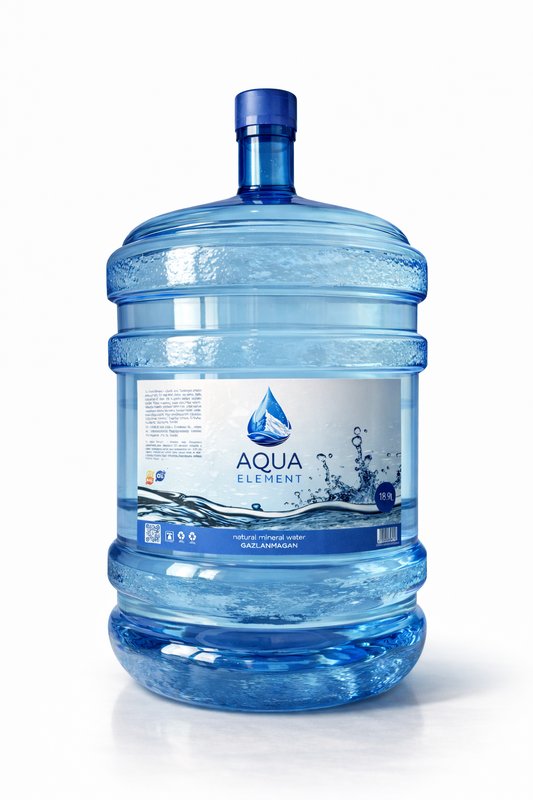
- 18.9 L format — for high-consumption households and homes with a cooler.
- Subscription delivery — reduces the risk of running out at an awkward moment.
- Tashkent and Tashkent Region delivery — no need to carry bottles from a shop with a baby in your arms.
Bottle hygiene is a separate but simple topic. Wipe the cooler and bottle neck with the solution recommended by your cooler manufacturer; do not leave an open bottle in sunlight; do not use water past its date. Before formula preparation, water must be boiled and cooled per your paediatrician and the formula manufacturer's instructions.
You can place an order on /shop, through the Telegram bot @aqua_element_bot, or by phone. Delivery terms and bottle handling are described on the delivery FAQ page.
FAQ — common questions from parents and expectant mothers
Can I use Aqua Element to prepare infant formula?
The published Aqua Element profile — low mineralisation (TDS 30–50 mg/L), low sodium — is generally consistent with what public-health guidance points to when choosing water for formula. That is not a clinical recommendation. Water for formula must still be boiled and cooled per your paediatrician and the formula manufacturer's instructions. The final decision belongs to the clinician following your child.
What is TDS and why does it matter?
TDS stands for total dissolved solids, expressed in mg/L. It is an integrated measure of mineralisation. Lower TDS means a smaller overall salt load, which is often cited as a preferred attribute for infant water.
Does Aqua Element disclose fluoride content?
Fluoride is not listed in the published mineral profile. That is an honest caveat. To get current laboratory data on fluoride and other parameters, request a report through the contact page or write to [email protected].
Is Aqua Element safe to drink during pregnancy?
It is water that has gone through an eleven-stage treatment process, with a transparently disclosed source, under Sanepid oversight. Pregnancy is an individual condition. Discuss any hydration specifics with your obstetrician.
Why is the 10 L format good for a kitchen?
It is a compact volume that fits in a cupboard, can be moved with one hand, and works without a cooler. For families with an infant, this is often more practical than 18.9 L.
How is artesian water different from tap water?
Artesian water comes from an underground aquifer under pressure; in Aqua Element's case, from about 120 metres. Tashkent tap water passes through municipal treatment and has a different profile.
Do I need to boil Aqua Element before mixing formula?
Yes. Low mineralisation does not replace boiling. Water for formula should be boiled and cooled per your paediatrician and the formula maker's instructions.
How often should a household with a baby reorder water?
It depends on consumption. A practical approach is a subscription with regular delivery, so you avoid the "we ran out" scenario.
Can I use Aqua Element to make porridge and toddler meals?
Low-mineralised water is often chosen for toddler meals. The final solid-foods schedule and temperature regime should be discussed with your paediatrician.
Where can I see the full eleven-stage treatment process?
The full breakdown is on the eleven-stage filtration page.
Closing reminder
This article shares general drinking-water guidance from public-health sources and the Aqua Element product profile. It is not medical advice. For decisions about infant feeding, formula preparation, or pregnancy nutrition, always consult a paediatrician, obstetrician, or qualified health professional. Local water-quality conditions and individual health circumstances vary.
Ready to set up delivery? Browse the range on /shop, read the terms on /water-delivery-faq, or learn how the water is treated on /process/11-step-filtration. Orders are also available through the Telegram bot.